
Red, white, bold, and mischievous; One glimpse of that hat and your brain fills in the rest. Before you even open the book, something clicks. Maybe you remember sitting cross-legged on a classroom carpet. Maybe it was bedtime, with a voice bringing each rhyme to life. Either way, the moment you see him, you are transported. The interaction is not with a real animal, but with a character who feels just as alive. That is the magic of The Cat in the Hat.
It is not simply a children’s book. It is a rite of passage. A literacy breakthrough. A character who slipped into homes in 1957 and never really left. It is more than a children’s story. It is a cultural marker. A literacy milestone. A character that has quietly shaped generations of readers without ever losing its edge.
But how much do you actually know about it? In this guide, you will discover 15 fascinating Cat in the Hat facts that reveal the story behind the story. Some may surprise you. Some may shift how you see the character. And at least one might make you glance at your bookshelf with fresh appreciation.
Key Takeaways
The Cat in the Hat was created to solve a real literacy problem in 1950s America.
The book’s strict 236-word limit shaped its rhythm, structure, and lasting appeal.
Its cultural influence now extends beyond books into collectables, including The Cat in the Hat TUBBZ collectable.
Fact 1: Born from Boring School Books
In the 1950s, early reading primers like Dick and Jane were criticised for being dull. Publishers wanted something more engaging. Dr Seuss was challenged to create a fun book using a limited vocabulary list. The result changed children’s publishing forever. This is a core part of The Cat in the Hat's history and explains why it feels so energetic compared to earlier school texts.
The Cat in the Hat: The Cat in the Hat TUBBZ (Collector's Edition)

£19.99
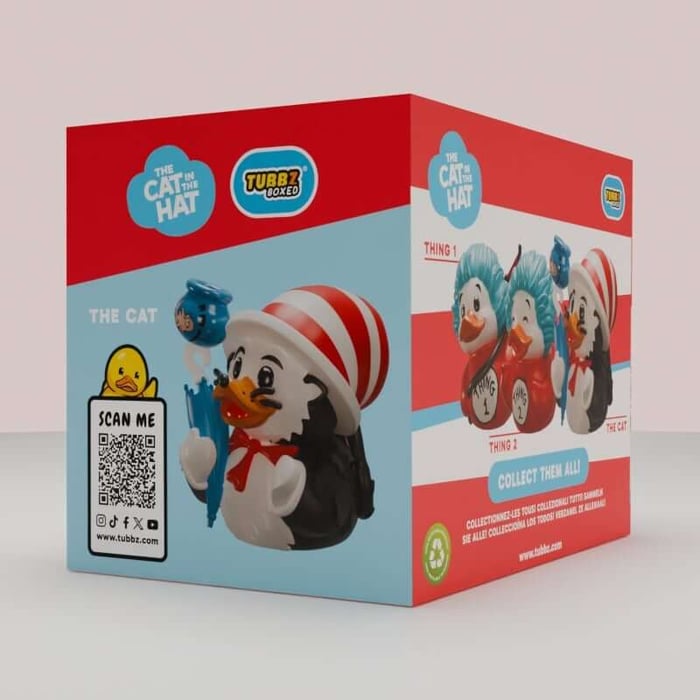
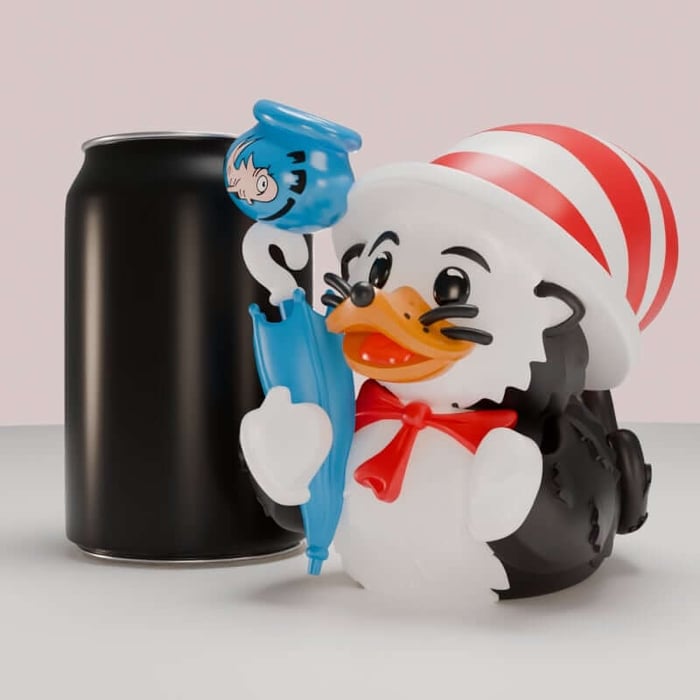
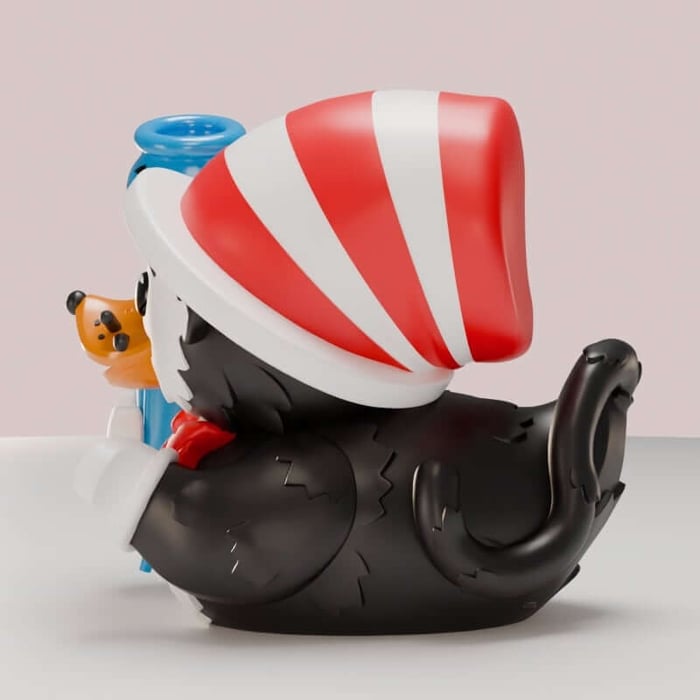
The Cat in the Hat leaps off the page and into duck form as a premium TUBBZ collectible. Capturing his unmistakable red-and-white striped hat, bow tie, and mischievous grin, this Collector’s Edition also features his blue umbrella, balancing a fishbowl on top… read more
Fact 2: It Was Written Using Only 236 Unique Words
One of the most interesting Cat in the Hat facts is its vocabulary restriction. The book reportedly uses just 236 different words. That constraint forced creativity. It created rhythm. Repetition. Momentum. If you have ever wondered how many words are in The Cat in the Hat, now you know the secret behind its simplicity.
Fact 3: When was The Cat in the Hat published?
The book was first published in 1957, at a time when American education was under scrutiny. Schools were re-evaluating how children learned to read, and traditional primers were being criticised for lacking imagination.
Into that environment stepped a mischievous feline with rhythm, energy, and controlled chaos. The timing was not accidental. The book arrived precisely when educators and parents were ready for something different. That cultural moment helped cement its place in literary history.
Fact 4: Dr Seuss Struggled to Find the Right Animal
The character was not automatically a cat. Dr Seuss reportedly explored different animals before settling on one that captured the right tone. Why a cat? Because a cat feels self-assured. Slightly rebellious. Observant. A cat can enter a room and own it without saying a word. That independence made the character believable as an agent of chaos.
Once the tall striped hat was added, the personality became unmistakable.
Fact 5: The Cat Is Dressed Like a Performer
Look closely at the outfit. Bow tie. Red and white striped hat. Upright posture. He looks less like a household pet and more like a stage performer or magician about to begin a show. That visual choice is deliberate. The entire story unfolds like a theatrical act performed in a living room. The Cat does not simply visit. He performs. And you, as the reader, become part of the audience.
The Cat in the Hat: The Cat in the Hat TUBBZ (Boxed Edition)

£14.99
The Cat in the Hat TUBBZ Boxed Edition delivers classic Dr. Seuss charm as a sleek, display-ready collectible. Featuring his iconic red-and-white striped hat, bow tie, mischievous expression, and blue umbrella with a balancing fishbowl on top, this detailed collectible is ideal for a clean,… read more
Fact 6: The Cat Represents Controlled Chaos
He creates mess, noise, and disruption. Yet he never truly loses control. That balance is everything. The story stretches the rules just far enough to feel thrilling, but not so far that it becomes unsettling. By the final pages, order is restored.
This structure keeps the narrative exciting while still safe. Many facts about The Cat in the Hat book point to this tension as the secret behind its lasting success. It allows children to explore rebellion without consequences, spiralling out of control.
Fact 7: The Cat Has No Official Backstory
Where does he come from? Where does he go after the clean-up? You are never told. That mystery is deliberate. Without a fixed origin or explanation, the Cat becomes symbolic. He represents imagination itself, appearing whenever routine needs disrupting. Because he is not tied to a specific world or timeline, he feels timeless.
Fact 8: It Transformed Children’s Publishing
The book did more than entertain. It launched the Beginner Books imprint and reshaped early literacy publishing. Teachers quickly adopted it for classroom reading sessions because it proved something powerful. Learning to read did not have to be dull or mechanical. It could be rhythmic. Playful. Energetic. That shift influenced decades of children’s publishing that followed.
Fact 9: It Has Sold Millions of Copies Worldwide
The book has sold millions of copies worldwide and has been translated into numerous languages. Its simple vocabulary and strong rhythm make it adaptable across cultures, allowing new generations of readers to experience it in their own language.
This global reach is not accidental. The themes of curiosity, imagination, and mild rebellion resonate almost everywhere. Children recognise the excitement. Parents recognise the learning value. Very few early reader books achieve that balance. That is why The Cat in the Hat remains a cornerstone of children’s literature decades after its first publication.
Fact 10: It Inspired Film and Television Adaptations
The Cat did not stay on the page for long. Over the years, the story inspired animated television specials and a live-action film adaptation. Each version reintroduced the character to a new generation. While not every adaptation received the same critical response, they reinforced one clear point. The Cat had become more than a book character. He was now embedded in wider pop culture.
Fact 11: The Cat Never Apologises
One of the more subtle and interesting Cat in the Hat facts is how the story ends. The Cat cleans up the chaos he created, restores order, and quietly exits. But he never offers a direct apology. Instead, the final moral question is left to the children. Should they tell their mother what happened? That open ending invites discussion. It encourages reflection rather than imposing a lesson. For a children’s book, that nuance is surprisingly sophisticated.
Fact 12: Thing One and Thing Two Have No Individual Identity
Thing One and Thing Two are intentionally interchangeable. They share identical appearances and matching energy. They represent pure, unfiltered disruption. By keeping them visually and behaviourally aligned, the story sharpens focus on the Cat as the orchestrator of events. The chaos feels amplified, but still controlled.
Fact 13: The Character Crossed Into Pop Culture Merchandise
As the book’s influence grew, so did its presence beyond literature. The character expanded into licensed merchandise across clothing, home décor, and collectables. This shift reflects a broader trend. Literary icons are no longer confined to pages. They become part of display culture. Part of personal identity. When a character resonates this strongly, it naturally finds new forms beyond the original story.
Fact 14: The Cat in the Hat TUBBZ Brings Literary Nostalgia to Collectors
One of the most modern Cat in the Hat facts is its crossover into collectable culture. The Cat in the Hat TUBBZ collectable reimagines the character as a cosplaying duck while preserving the iconic striped hat and expression. It blends literary nostalgia with display design.
For collectors building shelves that mix gaming, film and books, this piece adds literary depth. The Cat in the Hat duck figure stands out because it is rooted in reading culture rather than blockbuster cinema.
If you are looking to buy The Cat in the Hat TUBBZ, securing it while available makes sense, especially if you value a boxed TUBBZ collectable for long-term display.
The Cat in the Hat: The Cat in the Hat TUBBZ (Mini Edition)

£6.99
The Cat in the Hat Mini TUBBZ delivers classic Dr. Seuss fun as a compact shelf-ready collectible. Featuring his iconic red-and-white striped hat and bow tie, this smaller-sized TUBBZ is packed with character and is perfect for collectors with limited space. Key Details Official Dr. Seuss merchandise Designed… read more
Fact 15: The Cat Remains a Symbol of Playful Imagination
Decades after its publication, the Cat still stands for creativity over routine and curiosity over conformity. He represents the spark that disrupts boredom and turns an ordinary day into something unexpected. That symbolism has not faded. If anything, it feels more relevant in structured, screen-filled lives. The character reminds you that imagination thrives when rules are gently challenged. This is why interesting Cat in the Hat facts continue to fascinate readers of all ages. The story may be simple, but the ideas behind it remain powerful.
Conclusion
These 15 unique Cat in the Hat facts reveal more than trivia. They show how a simple children’s book reshaped literacy, publishing, and pop culture. You now understand its origins. Its structure. Its symbolism. And its ongoing influence. If you appreciate the character beyond the page, exploring literary collectables such as The Cat in the Hat TUBBZ can extend that connection into your display space. When a story lasts this long, it deserves more than nostalgia. It deserves appreciation.