Chaos bursts through the door, furniture flips, kites fly indoors, and two tiny figures with electric blue hair turn a quiet afternoon upside down. You recognise them in seconds. Red suits. Numbered chests. Zero hesitation. Thing 1 and Thing 2 are not background characters. They are controlled chaos wrapped in perfect design.
Nearly seventy years after their debut in The Cat in the Hat, they still dominate costume trends, classroom themes, and collectable shelves. That kind of longevity does not happen by accident. So what makes two identical troublemakers so enduring? Why do fans still debate Thing 1 vs Thing 2? And why does demand for Thing 1 and Thing 2 collectables remain strong decade after decade?
In this guide, you will explore their origins, their symbolic meaning, their cultural evolution, and the reason they continue to rank among the most recognisable Cat in the Hat characters ever created.
Key Takeaways
Thing 1 and Thing 2 were designed as controlled chaos within a carefully structured children’s story.
Their identical appearance is intentional and symbolic, not accidental.
Their strong visual identity makes them ideal for merchandise, costumes, and collectables.
What are Thing 1 and Thing 2?
Thing 1 and Thing 2 are supporting characters from the 1957 children’s book The Cat in the Hat by Dr Seuss. They are introduced by the Cat as helpers, but quickly become agents of mischief inside Sally and her brother’s home.
They are small, energetic, and nearly identical. Each wears a red bodysuit labelled with their name. Their bright blue hair adds to their exaggerated, cartoonish energy. Importantly, they are not independent characters in the traditional sense. They function as extensions of the Cat’s chaos. That simplicity is part of their brilliance.
The Cat in the Hat was created to improve literacy engagement in early readers during the 1950s, using controlled vocabulary and rhythm to build reading confidence. The characters of Thing 1 and Thing 2 were part of that carefully engineered storytelling structure.
The Origins of Thing 1 and Thing 2
Before you can understand their impact, you need to understand where they came from. Their creation was not random. It was part of a carefully structured storytelling challenge. Let’s take a closer look at the origins of Thing 1 and Thing 2 and how they were designed to bring controlled chaos into a children’s classic.
Creation by Dr Seuss
The book was published in 1957. It was written in response to concerns that American children’s reading levels were declining. Dr Seuss was challenged to create an engaging story using a limited vocabulary list of just 236 words.
Within that constraint, Thing 1 and Thing 2 added energy and unpredictability. They break objects. They fly kites indoors. They escalate the tension. Their chaos makes the moral resolution more satisfying.
Thing 1
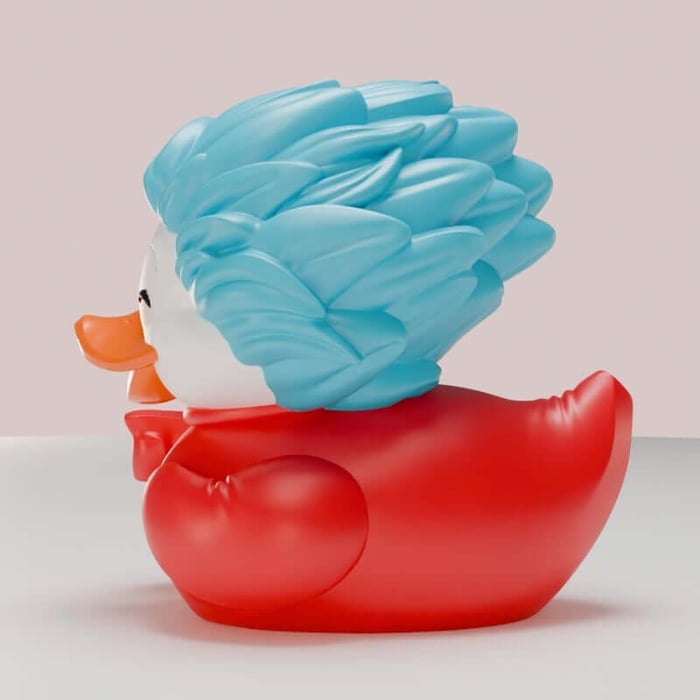
Thing 1 is introduced as the first spark of chaos. The moment he appears, the energy shifts. He moves fast, acts first, and thinks later. There is no layered backstory or emotional arc. Instead, Thing 1 represents impulse in its purest form. His numbered identity keeps him simple, bold, and instantly recognisable, which is exactly why he translates so effectively into merchandise and collectables today.
The Cat in the Hat: Thing 1 TUBBZ (Collector's Edition)

£19.99
Thing 1 brings playful chaos to the TUBBZ lineup. From the bright blue hair to the bold red outfit, this Collector’s Edition perfectly captures the energy and personality of one of Dr. Seuss’s most recognisable troublemakers, complete with a red… read more
Thing 2
Thing 2 mirrors the same explosive energy, arriving as an extension rather than a variation. He does not counterbalance Thing 1. He amplifies him. Together, they escalate the disorder inside the house at double speed. Like his counterpart, Thing 2 has no distinct personality traits. That sameness is intentional. It reinforces their role as interchangeable forces of chaos, which is precisely what makes the duo visually powerful and perfect for paired displays in collectables and themed merchandise.
The Cat in the Hat: Thing 2 TUBBZ (Collector's Edition)

£19.99
Thing 2 joins the fun as a detailed Collector’s Edition TUBBZ. With their bright red outfit, wild blue hair, and a playful expression, this collectible captures the unmistakable look fans know and love and pairs perfectly with Thing 1 for a truly… read more
Their Role in the Narrative
They raise the stakes. Without them, the Cat’s mischief would feel limited. With them, the house turns into a whirlwind of movement and disorder. Yet they are also easily contained. The fish captures them in a net. Order is restored. The structure remains intact.
Why They Were Designed as Identical Characters
Both were deliberately designed to look identical. This makes them easier for young readers to recognise while amplifying the sense of fast-moving chaos in the story. Two matching troublemakers feel more disruptive than one.
Their sameness also reinforces their symbolic role. They represent pure impulse rather than individual personality. That bold, simple design is exactly why they remain instantly iconic and so effective in illustrations, costumes, and collectables.
Personality and Character Traits
Now that you understand their design, it is time to look beyond appearance. What truly defines the duo is not how they look, but how they behave. Let’s take a closer look at the personality and character traits that make Thing 1 and Thing 2 unforgettable.
Playful but Destructive Energy
Thing 1 and Thing 2 embody childhood in its most unfiltered form. They are energetic, curious, and completely unaware of consequences. Their actions are not driven by cruelty, but by excitement. They move first and think later. That is precisely why they resonate. You recognise that restless urge to test limits. They capture the thrill of pushing boundaries without fully understanding the fallout.
The Cat in the Hat: Thing 1 TUBBZ (Mini Edition)

£6.99
Thing 1 Mini TUBBZ brings playful chaos in pint-sized form. Featuring his bright red outfit, wild blue hair, and energetic expression, this mini collectible captures the bold, recognisable look fans know and love in a compact format. Key Details Official… read more
Lack of Individual Identity
Unlike many modern characters, they have no backstories, no emotional depth, and no character arcs. They are intentionally flat. That blank-slate design allows you to project meaning onto them. Over time, the meaning of Thing 1 and Thing 2 has expanded culturally. The labels are now used playfully between siblings, friends, and even colleagues. Their identity is flexible, and that flexibility keeps them relevant.
The Cat in the Hat: Thing 2 TUBBZ (Mini Edition)

£6.99
Thing 2 Mini TUBBZ arrives in compact form, packed with personality and playful detail. With his bright red outfit, wild blue hair, and cheerful expression, this mini collectible brings classic Dr. Seuss character to any TUBBZ display. Key Details Official Dr. Seuss… read more
What They Represent Symbolically
At a deeper level, they symbolise unchecked imagination, disruption of routine, and temporary rebellion. They bring chaos into a structured world, but only for a moment. Crucially, order is restored by the end of the story. The chaos does not win. That balance between rebellion and resolution is a key reason the book has remained relevant since 1957.
Thing 1 and Thing 2 in Film and Television Adaptations
Their impact did not stop on the printed page. As the story expanded into new formats, the duo evolved with it, reaching entirely new audiences. Let’s take a closer look at how they were adapted for film and television, and how those appearances shaped their modern popularity.
Animated Adaptations
The characters have appeared in animated specials and adaptations over the decades. These versions maintain their hyperactive energy while sometimes expanding their visual exaggeration.
Live-Action Interpretations
In the 2003 live-action adaptation starring Mike Myers, Thing 1 and Thing 2 were reimagined using CGI, giving them a more exaggerated and chaotic presence. Their movements were faster, louder, and visually amplified to suit modern cinematic audiences.
The film reignited mainstream attention around the duo, particularly in seasonal merchandise and themed costumes. Each year, their recognisable red suits and wild blue hair resurface across retail and pop culture spaces, reinforcing their lasting visibility beyond the original book.
How Adaptations Shaped Their Popularity
Every new adaptation places Thing 1 and Thing 2 in front of a fresh audience. Children discover them through animation or film, while adults reconnect through nostalgia. That multi-generational exposure keeps them culturally active rather than frozen in the 1950s.
As their screen presence grows, so does interest in Cat in the Hat collectables and themed products. Strong media visibility naturally strengthens the merchandise cycle. When characters stay visible, they stay valuable.
Collectables Guide
From a collector’s perspective, Thing 1 and Thing 2 collectables benefit from three strengths:
Immediate recognisability
Pair-display appeal
Cross-generational nostalgia
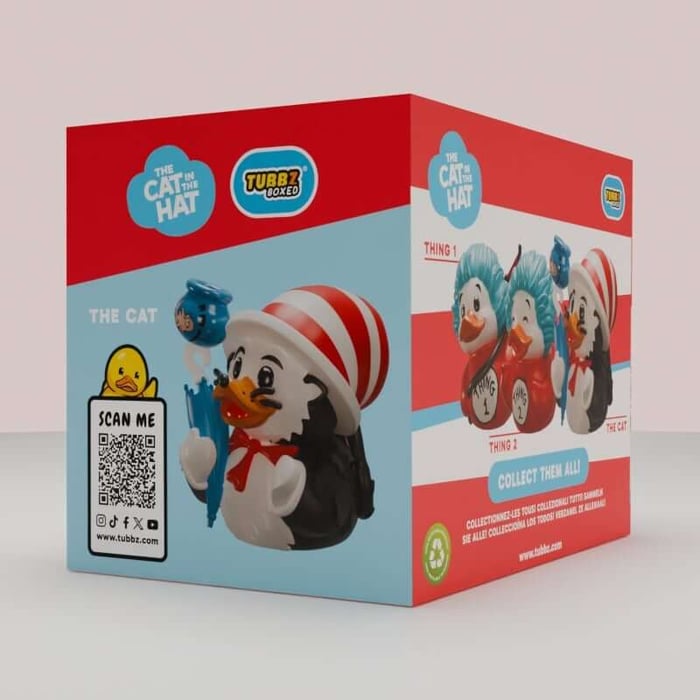
At JUST GEEK, the Dr Seuss range includes officially licensed Thing 1 and Thing 2 TUBBZ in Mini, Boxed, and Collector’s Editions. Each version captures the bright red suit and electric blue hair in duck form while preserving the numbered chest design.
Thing 1 Collectables
When it comes to Thing 1 collectables, separation is rare. Most collectors naturally purchase both figures together. The numbered identity encourages that pairing behaviour. Owning just one feels unfinished, while displaying both instantly creates balance and impact. Because they were designed as a duo, their perceived value strengthens when sold and displayed together. In collecting psychology, symmetry increases satisfaction.
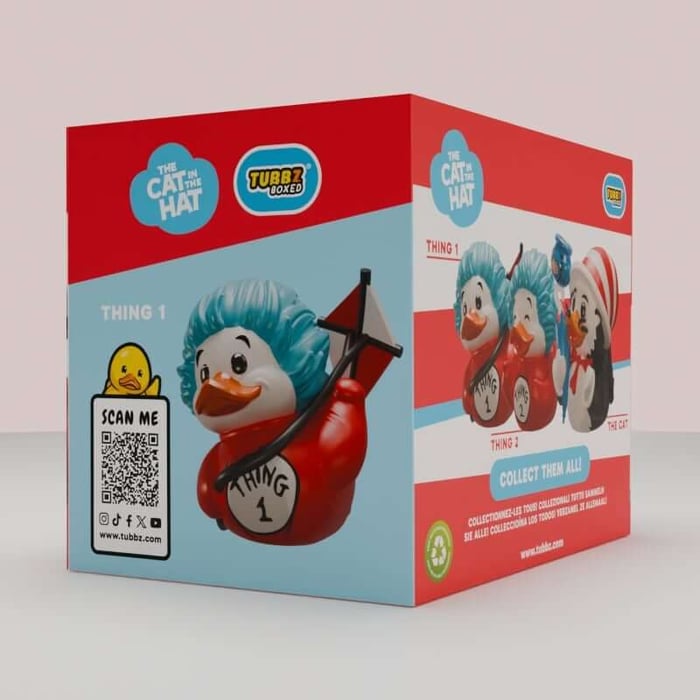
The Cat in the Hat: Thing 1 TUBBZ (Boxed Edition)

£14.99
Thing 1 arrives as a boxed TUBBZ collectible, bursting with personality and playful detail. Featuring his bright red outfit, wild blue hair, energetic expression, and red-and-white kite, this edition is presented in a window display box and is ideal for… read more
Thing 2 Collectables
Thing 2 functions in exactly the same way in collectable form. There is no hierarchy. No “main” character between the two. That equality enhances their appeal as a matched set. Visually, the mirrored design makes the dual display far more striking than a single standalone figure.
The Cat in the Hat: Thing 2 TUBBZ (Boxed Edition)

£14.99
Thing 2 arrives in boxed TUBBZ form, bringing bold colour and classic Dr. Seuss character to the collection. With his bright red outfit, wild blue hair, and playful expression, this display-ready collectible pairs naturally with other Cat in the Hat favourites. Key… read more
Display Tips for Collectors
If you are building a Cat in the Hat collectables display, small details make a big difference.
Place both figures at equal height to maintain symmetry. Keep them away from direct sunlight to preserve colour vibrancy, especially the bright blue hair. Retain original packaging where possible, as boxed condition can influence long-term collectability.
Most importantly, display them together. The duo was designed as a pair. Separating them reduces the visual story you are trying to tell.
Cultural Impact and Fan Popularity
Their appeal goes far beyond the pages of a children’s book. Over time, the duo has evolved into cultural shorthand for playful chaos and sibling-style mischief. Let’s take a closer look at their cultural impact and why they continue to rank among fan favourites today.
Why Fans Love Them
Fans are drawn to simplicity. Thing 1 and Thing 2 are bold, easy to recognise, and instantly memorable. Their bright red outfits and electric blue hair create a strong visual contrast that stands out in any setting. Their chaos feels playful rather than threatening, which makes them appealing to both children and adults.
In today’s global licensed merchandise market, entertainment characters continue to generate billions in annual revenue. Characters with clear, graphic identities tend to perform especially well because they translate seamlessly across books, film, costumes, and collectables. Thing 1 and Thing 2 fit that model perfectly.
Merchandise and Branding Expansion
Today, both 1 and 2 appear far beyond the original book. You see them on costumes, school event merchandise, party decorations, and collectable figures. Their simple colour palette and bold numbering make them easy to reproduce across different product categories without losing recognisability. That scalability is powerful. Not every character adapts smoothly to multiple formats, but this duo’s clean design makes branding consistent and commercially effective.
Thing 1 vs Thing 2: Is There a Favourite?
Officially, there is no difference between them. The story does not assign separate traits or hierarchy. Any preference is entirely personal. Some fans jokingly claim they relate more to “Thing 1 energy” or “Thing 2 energy.” That playful comparison keeps conversations alive and strengthens engagement. In reality, the appeal lies in the pair, not the individual.
Conclusion
Thing 1 & Thing 2 began as simple narrative devices inside a literacy-driven children’s book. Over time, they evolved into cultural shorthand for playful chaos. Their identical design was intentional. Their lack of individuality was strategic. Their visual clarity made them ideal for adaptation and merchandise. If you appreciate strong character branding, childhood nostalgia, or themed display collecting, exploring Thing 1 and Thing 2 gives you insight into how simple design can create lasting cultural power.
And if you are building a Dr Seuss shelf, displaying them together is not optional. It is essential.
FAQs:
Are Thing 1 and Thing 2 brothers?
The original book does not specify any biological relationship. They are presented as helpers introduced by the Cat.
Do Thing 1 and Thing 2 have different personalities?
No. They are intentionally identical in behaviour and design.
Why are they called Thing 1 and Thing 2?
The numbered names simplify recognition for early readers and reinforce their interchangeable nature.
When were Thing 1 and Thing 2 created?
They first appeared in The Cat in the Hat in 1957.
Are Thing 1 and Thing 2 more popular than the Cat?
They support the Cat’s character rather than replace him, but their visual identity often drives strong merchandise performance.