
What if a foggy American town held the key to understanding one of gaming's most complex horror universes? The Silent Hill Timeline is exactly that - a labyrinth of dates, dimensions, and dark mythology that has gripped players since 1999.
Whether you're a returning fan or new to the series, making sense of it all can feel as disorientating as wandering through the town itself. This guide cuts through the fog and lays it all out clearly.
Key Takeaways
Silent Hill games do not follow a simple release-order narrative - the story chronology is different from when the games launched.
Most mainline titles are set in the same haunted town but follow separate protagonists with loosely connected lore.
Silent Hill 3 is a direct sequel to the original Game, making it the only title that truly requires prior knowledge to be fully appreciated.
Silent Hill 2 Bubble Head Nurse Limited Edition Statue

£89.99
Don't miss out on this high-quality statue of the legendary Bubble Head Nurse, a menacing female creature born from James Sunderland's psyche, from the critically acclaimed horror game Silent Hill 2. This Bubble Head Nurse statue is 9 inches tall… read more
Overview of the Silent Hill Narrative Timeline
The Silent Hill universe spans over two decades of games, two films, and a rich mythology rooted in a cult, a tortured god, and a town that feeds on guilt. Understanding the series timeline means separating two distinct things: when games were released versus when their stories take place or connect within the lore.
The franchise was developed primarily by Konami's Team Silent between 1999 and 2004, during which it produced what many consider the series' golden era. Those four foundational games established the tone, the lore, and the iconic imagery that fans have carried with them ever since — inspiring a dedicated community that continues to grow long after the original studio disbanded.
Later entries came from Western studios and took the lore in new directions. Across all of it, the town of Silent Hill remains the constant — a place that warps reality and punishes those it draws in. That enduring power is reflected not just in ongoing fan discussion and debate, but in the thriving market for Silent Hill collectables that keeps the franchise alive between releases, giving fans a tangible connection to a universe that has shaped horror gaming for a generation.
Complete Game Timeline Explained
Core Chronological Sequence of Events
Here is the in-universe chronological order of the main Silent Hill games:
Story Order | Game Title | Release Year |
1 | Silent Hill (Backstory - The Cult Era) | 1999 |
2 | Silent Hill: Origins | 2007 |
3 | Silent Hill | 1999 |
4 | Silent Hill 3 | 2003 |
5 | Silent Hill 2 | 2001 |
6 | Silent Hill 4: The Room | 2004 |
7 | Silent Hill: Homecoming | 2008 |
8 | Silent Hill: Downpour | 2012 |
Note: Silent Hill 2 stands largely alone in terms of narrative. Its story is not directly dependent on the cult mythology that drives most other entries. That said, it is set in the same town and shares the same metaphysical rules.
Release Order vs Story Chronology
The release order of Silent Hill games does not reflect their story order - and this trips up a lot of fans. Silent Hill: Origins, for example, was released in 2007 but acts as a prequel to the original 1999 Game. It shows events that took place years before Harry Mason ever drove into that foggy town.
This gap between release and narrative chronology is quite common in horror franchises, but Silent Hill handles it with more complexity than most. Each Game tends to use the town as a reflection of a specific character's trauma, which means the lore builds laterally as much as it does sequentially. You can jump in at different points and still follow the story, to an extent.
The exception is Silent Hill 3, which picks up directly where the first Game ended. If you skip Silent Hill 1, you will miss crucial plot context that makes the third entry far less impactful.
Series Connections and Canon Explained
World-Building and Shared Setting
So, do all Silent Hill games take place in the same town? Mostly, yes. The majority of mainline titles are set in or around Silent Hill, a fictional town in New England, USA. However, the town itself shifts and changes depending on who is experiencing it. Its streets, landmarks, and horrors adapt to the protagonist's psychological state.
This design choice means the town feels familiar but never identical. You might recognise Toluca Lake or Brookhaven Hospital across multiple games, but their layout and meaning shift each time.
Continuity Between Games
Are all Silent Hills connected? In a thematic sense, absolutely. They share the same mythology, the same town, and the same central idea - that guilt and trauma manifest as physical monsters and environments. In terms of direct plot continuity, however, only a handful of games are tightly linked.
Silent Hill 1 and 3 form the clearest narrative thread, following the cult storyline directly. Silent Hill 2 is its own contained tragedy. Silent Hill 4: The Room barely takes place in the town at all, but connects through its antagonist, Walter Sullivan. Later entries like Homecoming and Downpour stand largely on their own.
Canon, Sequels, and Prequels
Which Silent Hill endings are canon? It is one of the most debated questions in the fanbase. The series traditionally offers multiple endings per Game, and Konami has never officially confirmed which are canonical. Fan consensus, based on sequel continuity, suggests the 'good' or 'true' endings are generally treated as canon - but the ambiguity is very much intentional.
Is Silent Hill 3 a prequel? No. It is a direct sequel to Silent Hill 1, set several years after the original Game's events. Do you need to play Silent Hill 1 and 2 before 3? You should play Silent Hill 1 before 3, as it provides essential story context. Silent Hill 2 is optional before playing 3, as they share very little narrative overlap.
Silent Hill Movie Timeline and Viewing Order
There are two Silent Hill films. The first, simply titled Silent Hill (2006), is loosely based on the original game and draws heavily from Silent Hill 3. It follows Rose Da Silva as she searches for her adopted daughter in the town.
The film brings several of the series' most iconic figures to the screen, including the terrifying Bubble Head Nurse, whose twitching, lurching presence translates disturbingly well from game to film and the unmistakable Red Pyramid Thing, known to fans simply as Pyramid Head, whose towering, blade-dragging silhouette became one of horror cinema's most memorable images the moment he appeared on screen.
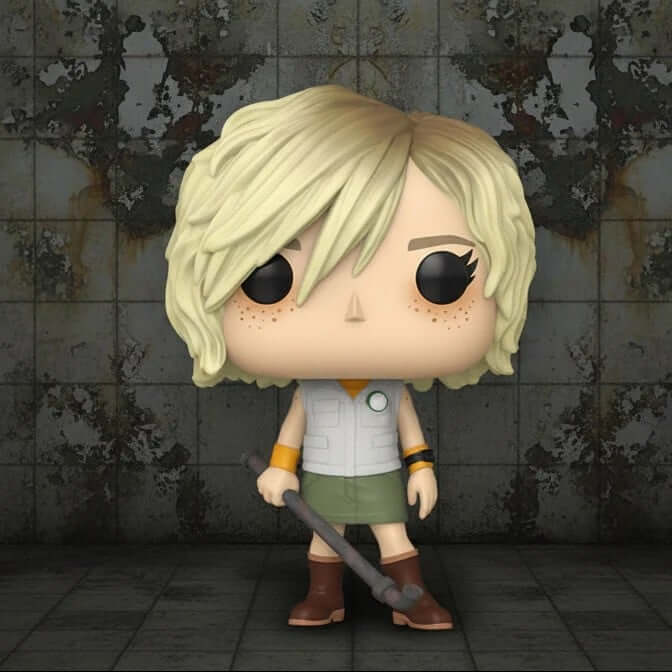
The sequel, Silent Hill: Revelation (2012), is more closely adapted from Silent Hill 3 and continues the story of Rose's daughter, now revealed to be Heather Mason, the same Heather players guide through Silent Hill 3's harrowing narrative. Revelation leans deeper into the series' cult mythology and reintroduces familiar faces, including Maria, the enigmatic and unsettling double of Mary Shepherd-Sunderland, whose connection to James Sunderland and the events of Silent Hill 2 remains one of the franchise's most emotionally complex storylines.
Even Robbie the Rabbit, the series' deceptively cheerful mascot whose blood-stained appearances in the games have made him a fan favourite, earns his place in the broader Silent Hill mythology that both films draw from so heavily.
For viewing order, watch Silent Hill (2006) first, then Silent Hill: Revelation (2012). The films exist in their own continuity, separate from the games, so you do not need prior game knowledge to follow them, though fans of the games will spot plenty of references, character callbacks, and visual cues that reward those who know the source material well.
Neither film is considered part of the games' canon, but both draw deeply from the series' visual language and mythology. Silent Hill: Revelation in particular mirrors much of Silent Hill 3's plot structure, making Heather Mason's journey feel genuinely faithful to the game that inspired it.
Conclusion
The Silent Hill Timeline is not a straight line - it is a web of trauma, mythology, and personal horror, shaped by dozens of characters across more than two decades. The key takeaway is this: if you want the core narrative experience, start with Silent Hill 1, then follow it with Silent Hill 3, and finally explore Silent Hill 2 as a standalone masterpiece.
For everything else - including the later titles and the films - treat them as companion pieces rather than required reading. The beauty of this franchise is that it rewards deep dives and personal interpretation. And if you want to bring a piece of that world home, Just Geek offers a fantastic range of Silent Hill figures, collectables, and memorabilia to fuel your obsession.
The fog never truly lifts in Silent Hill. But now, at least, you know where you are.
FAQs: Silent Hill Timeline
What is the Silent Hill Timeline in order?
The Silent Hill Timeline begins with the backstory of the town's cult, followed by Silent Hill: Origins as a prequel, then Silent Hill 1, Silent Hill 3, Silent Hill 2, Silent Hill 4, and the later entries. Origins and the original Game form the foundation of the entire lore.
Does the Silent Hill Timeline follow release order?
No. The Silent Hill Timeline and the Game release order differ significantly. Silent Hill: Origins, for example, came out in 2007 but is set before the 1999 original. Playing in release order is fine, but knowing the story order helps you follow the lore far more clearly.
Is Silent Hill 2 part of the main Silent Hill Timeline?
Silent Hill 2 sits within the broader Silent Hill Timeline but operates as a self-contained story. It shares the same town and metaphysical rules but has almost no direct plot connection to the cult storyline that links most other entries.
Where do the Silent Hill films fit in the Silent Hill Timeline?
The two films exist outside the main Silent Hill Timeline and follow their own continuity. Watch the 2006 film first, then the 2012 sequel. They borrow heavily from the games but are not considered canon to the Game series.
Do I need to know the Silent Hill Timeline to enjoy the games?
Not necessarily. Most Silent Hill games are designed to be experienced individually. However, understanding the Silent Hill Timeline does significantly deepen your appreciation of the lore, especially if you plan to play Silent Hill 3, which is a direct sequel to the original.